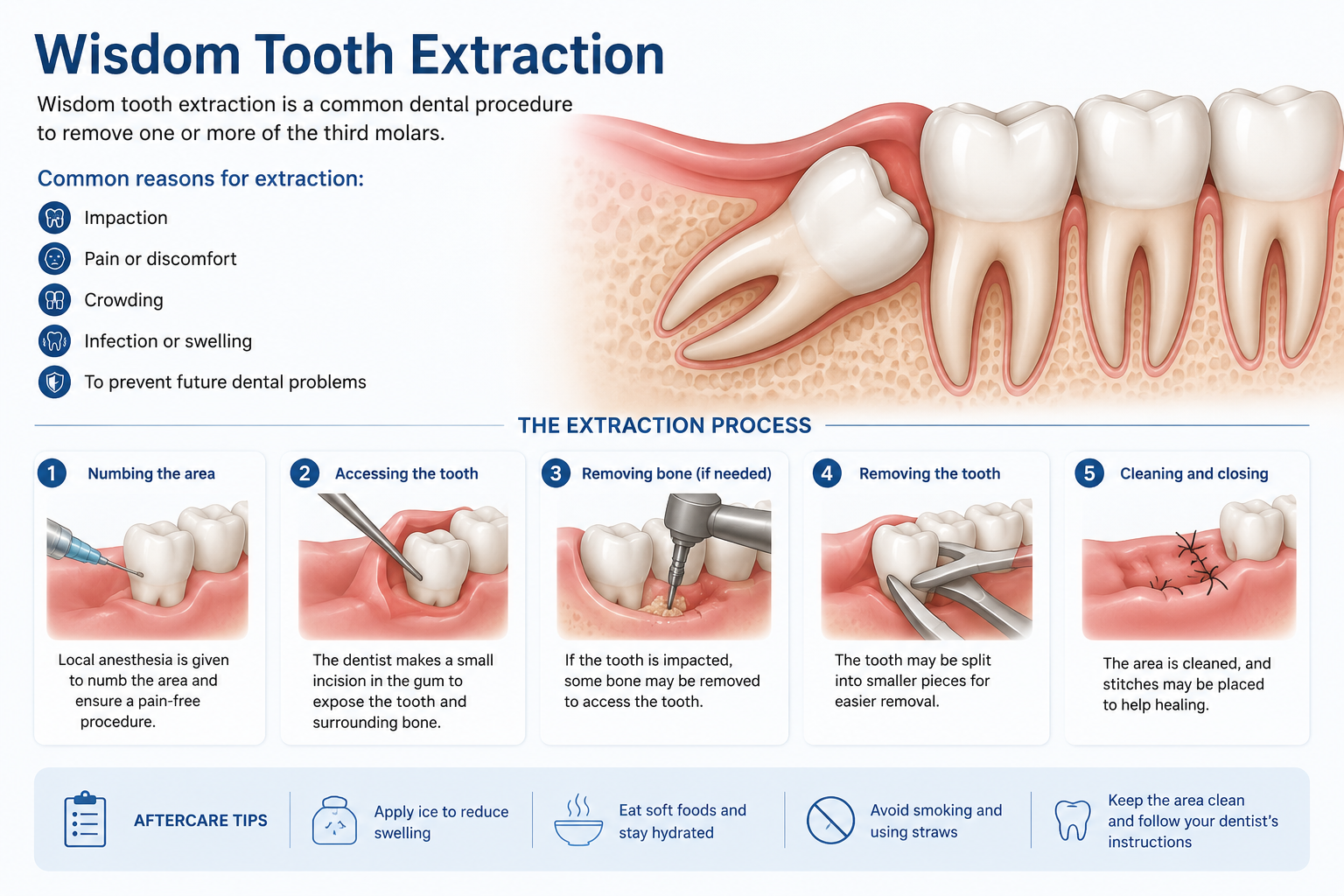
Wisdom tooth extraction is one of the most common oral surgery procedures performed to prevent pain, infection, and long-term dental complications. In a growing city like Durham, patients often seek timely and professional care due to overcrowding of teeth, impacted wisdom teeth, and recurring gum problems. Understanding when and why extraction is needed can help you make the right decision before complications worsen.
What Are Wisdom Teeth?
Wisdom teeth are the third set of molars that usually emerge between the ages of 17 and 25. Most people develop four wisdom teeth—two on the upper jaw and two on the lower jaw. However, in many cases, these teeth do not have enough space to grow properly, leading to impaction or partial eruption.
When wisdom teeth are misaligned or trapped under the gums, they can cause pain, swelling, and infection, making removal necessary.
Why Wisdom Tooth Extraction Is Needed
In many dental cases in Durham, dentists recommend extraction for the following reasons:
- Impacted teeth: Teeth stuck in the jawbone or gums
- Pain and swelling: Pressure on nearby teeth and tissues
- Crowding: Misalignment of existing teeth due to lack of space
- Infection risk: Bacteria buildup around partially erupted teeth
- Cysts or decay: Damage to surrounding bone or adjacent molars
Ignoring these issues can lead to more complex oral health problems and expensive treatments later.
Signs You May Need Wisdom Tooth Removal
You should consider a dental evaluation if you experience:
- Persistent pain at the back of the mouth
- Swollen or bleeding gums
- Jaw stiffness or difficulty opening mouth
- Bad breath or unpleasant taste
- Headaches or ear pain linked to dental pressure
Early diagnosis helps avoid surgical complications and reduces recovery time.
Wisdom Tooth Extraction Procedure
At a dental clinic in Durham, the procedure is typically performed by a dentist or oral surgeon. The steps include:
- Examination and X-rays – To check the position of the tooth
- Anesthesia – Local anesthesia or sedation for comfort
- Tooth removal – Simple extraction or surgical removal if impacted
- Stitches (if needed) – To help healing of gums
- Recovery guidance – Post-care instructions for faster healing
The procedure is generally safe and completed within 30–60 minutes depending on complexity.
Recovery After Wisdom Tooth Extraction
Recovery usually takes a few days to a week. Patients may experience mild swelling or discomfort, which is normal.
To ensure smooth healing:
- Apply ice packs for swelling
- Eat soft foods like yogurt, soup, and mashed potatoes
- Avoid smoking and alcohol
- Do not use straws for the first 24–48 hours
- Maintain gentle oral hygiene
Following dentist instructions reduces the risk of dry socket and infection.
Benefits of Timely Extraction
- Prevents infection and gum disease
- Reduces crowding and alignment issues
- Improves overall oral health
- Eliminates chronic pain
- Protects nearby teeth from damage
Early treatment ensures a healthier smile and avoids future complications.