Root Canal Treatment in Durham: Signs You May Need a Root Canal and What to Expect
A persistent toothache, sensitivity to hot or cold, or swelling around a tooth can be signs that something deeper is affecting your oral health. When the inner pulp of a tooth becomes infected or severely inflamed, root canal treatment may be recommended to remove the infection and preserve the natural tooth.
For patients looking for root canal treatment in Durham, understanding the warning signs and treatment process can make it easier to seek dental care at the right time.
What Is Root Canal Treatment?
Root canal therapy, also called endodontic treatment, is a dental procedure used to treat infection or inflammation inside a tooth. The inner portion of a tooth contains pulp, which includes nerves and blood vessels. When bacteria reach the pulp through deep decay, cracks, trauma, or repeated dental procedures, the tissue can become infected. Root canal treatment removes the affected tissue, cleans the inside of the tooth, and seals it to help prevent reinfection. The goal is to save the natural tooth rather than remove it.What Are the Signs You May Need a Root Canal?
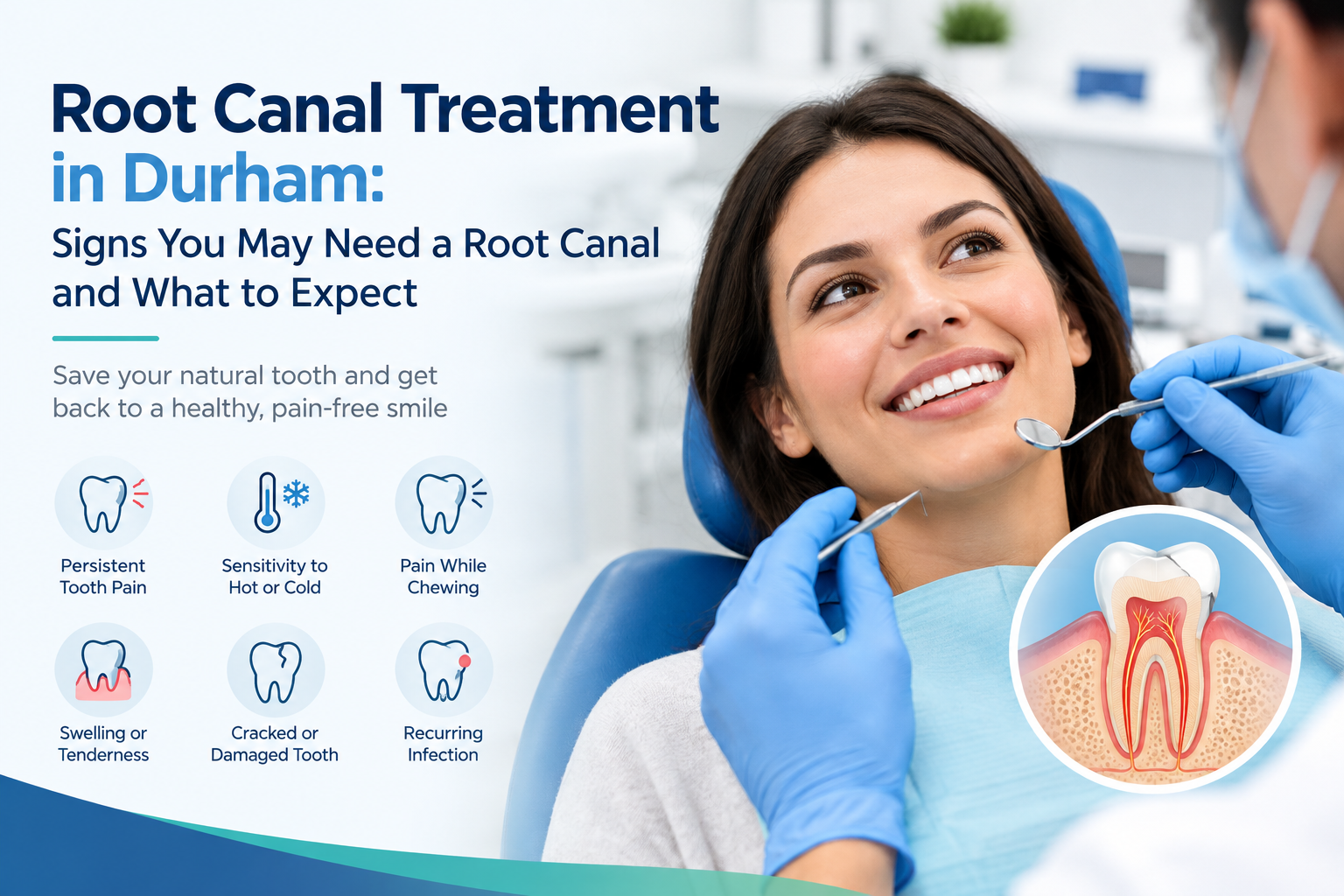
Not every toothache requires root canal treatment. However, certain symptoms may indicate that the pulp inside the tooth has become damaged or infected. Common warning signs include:- Persistent or severe tooth pain
- Prolonged sensitivity to hot or cold
- Pain when biting or chewing
- Swelling or tenderness around the tooth
- A small bump or pimple on the gums
- Tooth discoloration
- Recurring dental infection
What Causes a Tooth to Need a Root Canal?
Several dental problems can damage the pulp and eventually lead to infection.Deep Tooth Decay
Untreated cavities can progress deeper into the tooth. When decay reaches the pulp, bacteria can cause inflammation or infection.Cracked or Fractured Teeth
A crack can allow bacteria to enter the inner portion of the tooth. Depending on the severity and location of the fracture, root canal treatment may be considered.Dental Trauma
An injury to the mouth can damage the pulp even when the outside of the tooth does not appear severely damaged.Repeated Dental Procedures
Multiple procedures on the same tooth can sometimes affect the pulp and contribute to inflammation or damage.What Happens During a Root Canal?
Modern root canal treatment is designed to remove infection while preserving the natural tooth. The procedure generally involves several steps:1. Examination
The dentist evaluates your symptoms and examines the affected tooth. Digital X-rays may be used to assess the roots and surrounding structures.2. Numbing the Area
Local anesthesia is used to make the treatment area numb and help keep you comfortable throughout the procedure.3. Removing the Infected Pulp
The dentist creates a small opening in the tooth and carefully removes the infected or damaged pulp tissue.4. Cleaning and Disinfecting
The inside of the tooth is thoroughly cleaned and disinfected to remove bacteria and debris.5. Sealing the Tooth
The cleaned space is filled and sealed to help prevent bacteria from entering the tooth again.6. Restoring the Tooth
Depending on the condition of the tooth, a permanent restoration such as a dental crown may be recommended to strengthen and protect it.Is Root Canal Treatment Painful?
Root canal treatment has a reputation for being painful, but modern dental techniques and local anesthesia are designed to make the procedure more comfortable. Some patients may experience mild tenderness or sensitivity after treatment. This generally improves over the following days. Your dentist can provide specific aftercare instructions based on your individual situation.Why Is It Important to Treat an Infected Tooth?
Delaying treatment for an infected tooth can allow the infection to progress. In some cases, an untreated dental infection can lead to an abscess, swelling, bone damage, or the eventual loss of the tooth. Seeking professional dental care when symptoms first appear can help identify the cause and determine an appropriate treatment plan.Can a Root Canal Save Your Natural Tooth?
One of the main purposes of root canal treatment is to preserve a natural tooth that might otherwise require extraction. After the infected pulp is removed and the tooth is properly cleaned, sealed, and restored, the treated tooth can continue to function. Good oral hygiene and regular dental checkups are important for maintaining the tooth over the long term.How Should You Care for Your Tooth After a Root Canal?
Following your dentist’s instructions is important for protecting the treated tooth. Helpful practices include:- Brush twice a day with fluoride toothpaste
- Floss regularly
- Avoid chewing hard foods on the treated tooth until your dentist recommends otherwise
- Attend follow-up appointments
- Maintain regular dental examinations and professional cleanings
- Contact your dentist if pain, swelling, or other concerning symptoms continue