Dental Implants in Durham: A Complete Guide to Restoring Your Smile
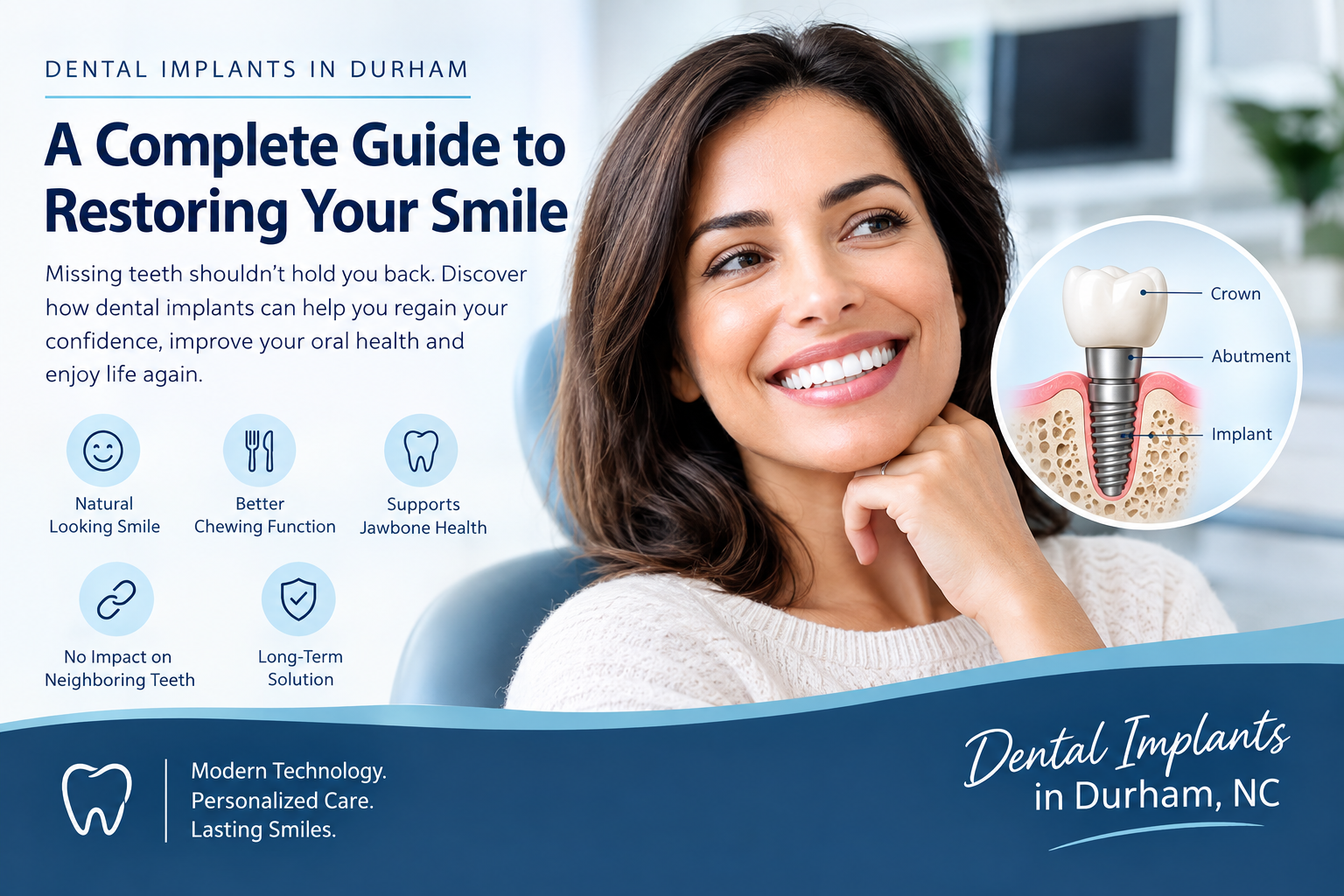
Missing teeth can affect more than just the appearance of your smile. They can make eating and speaking more difficult, affect your confidence, and may contribute to changes in your oral health over time. Fortunately, dental implants offer a durable and natural-looking way to replace missing teeth and restore both function and appearance.
If you are considering dental implants in Durham, understanding how implants work, their benefits, and the treatment process can help you make an informed decision.
What Are Dental Implants?
Dental implants are tooth replacement solutions designed to replace the root of a missing tooth. An implant is placed into the jawbone and, after the area heals, is restored with a dental crown, bridge, or implant-supported denture. Because implants are anchored in the jaw, they can provide excellent stability while helping create a natural-looking smile. At Durham Cosmetic and Family Dentistry, implant treatment is planned using advanced technology, including 3D cone beam CT imaging and computer-guided placement.Why Consider Dental Implants?
Dental implants can provide several advantages for people who have lost one or more teeth.1. Natural-Looking Results
A properly designed implant restoration can be customized to complement the shape, color, and appearance of your existing teeth. This helps create a smile that looks natural.2. Improved Chewing Function
Missing teeth can make it harder to chew certain foods comfortably. Dental implants provide stability that can make everyday eating easier.3. Support for Jawbone Health
When a tooth is lost, the jawbone in that area can gradually deteriorate. Dental implants are designed to function as tooth roots and can help maintain the structure of the jaw.4. No Modification of Neighboring Healthy Teeth
Unlike some traditional dental bridges, an individual dental implant does not require healthy neighboring teeth to be modified for support.5. Long-Term Tooth Replacement
With appropriate oral hygiene, regular dental visits, and proper care, dental implants can provide a long-lasting tooth replacement option.What Types of Implant Dentistry Are Available?
Dental implant treatment can be customized depending on how many teeth are missing and your overall oral health.Single-Tooth Dental Implants
A single dental implant can replace one missing tooth without relying on neighboring teeth for support. The implant is typically restored with a custom dental crown.Multiple Dental Implants
If several teeth are missing, multiple implants may be used to support a restoration designed to replace several teeth.Full-Arch Implant Solutions
Patients who have lost most or all of their teeth may be candidates for full-arch implant solutions, including approaches such as All-on-4® or All-on-6 style restorations.Implant-Supported Dentures
Dental implants can also be used to improve the stability of dentures. Instead of relying entirely on adhesives or suction, implant-supported dentures are anchored to dental implants.What Is the Dental Implant Process?
The implant journey generally begins with a comprehensive dental evaluation. Your dentist will examine your teeth, gums, jawbone, and overall oral health before developing a treatment plan.Step 1: Consultation and Evaluation
During your consultation, your dentist will discuss your concerns, examine your oral health, and determine whether dental implants may be appropriate for you.Step 2: Digital Treatment Planning
Advanced imaging, such as 3D cone beam CT scans, can provide detailed information about your jaw and help with treatment planning.Step 3: Implant Placement
The dental implant is carefully positioned in the jawbone. Computer-guided techniques may be used to help achieve precise placement.Step 4: Healing and Integration
The implant needs time to integrate with the surrounding jawbone. This process provides the foundation needed for the final restoration.Step 5: Final Restoration
Once healing is complete, the implant can be restored with a crown, bridge, or implant-supported denture, depending on your treatment plan.How Does Technology Improve Implant Treatment?
Modern dental technology can play an important role in planning and performing implant treatment. At Durham Cosmetic and Family Dentistry, implant planning may incorporate 3D cone beam CT imaging and computer-guided implant placement. These technologies allow the dental team to evaluate the treatment area in detail and plan implant positioning carefully. Minimally invasive techniques may also be used when appropriate to support patient comfort and healing.Are Dental Implants Right for Everyone?
Dental implants are not automatically the right solution for every patient. Your dentist will need to evaluate your oral health, jawbone condition, gums, and individual treatment goals. If you have missing teeth and are considering implants, a professional consultation is the best way to determine which tooth replacement options may be suitable for you.How Can You Care for Dental Implants?
Good oral hygiene remains important after receiving dental implants. Helpful habits include:- Brush your teeth regularly.
- Clean carefully around the implant restoration.
- Floss or use recommended interdental cleaning tools.
- Maintain regular dental examinations and professional cleanings.
- Follow your dentist’s post-treatment instructions.
- Contact your dental office if you notice discomfort or changes around the implant.