Root Canal Dentist in Durham, NC | Durham Cosmetic and Family Dentistry
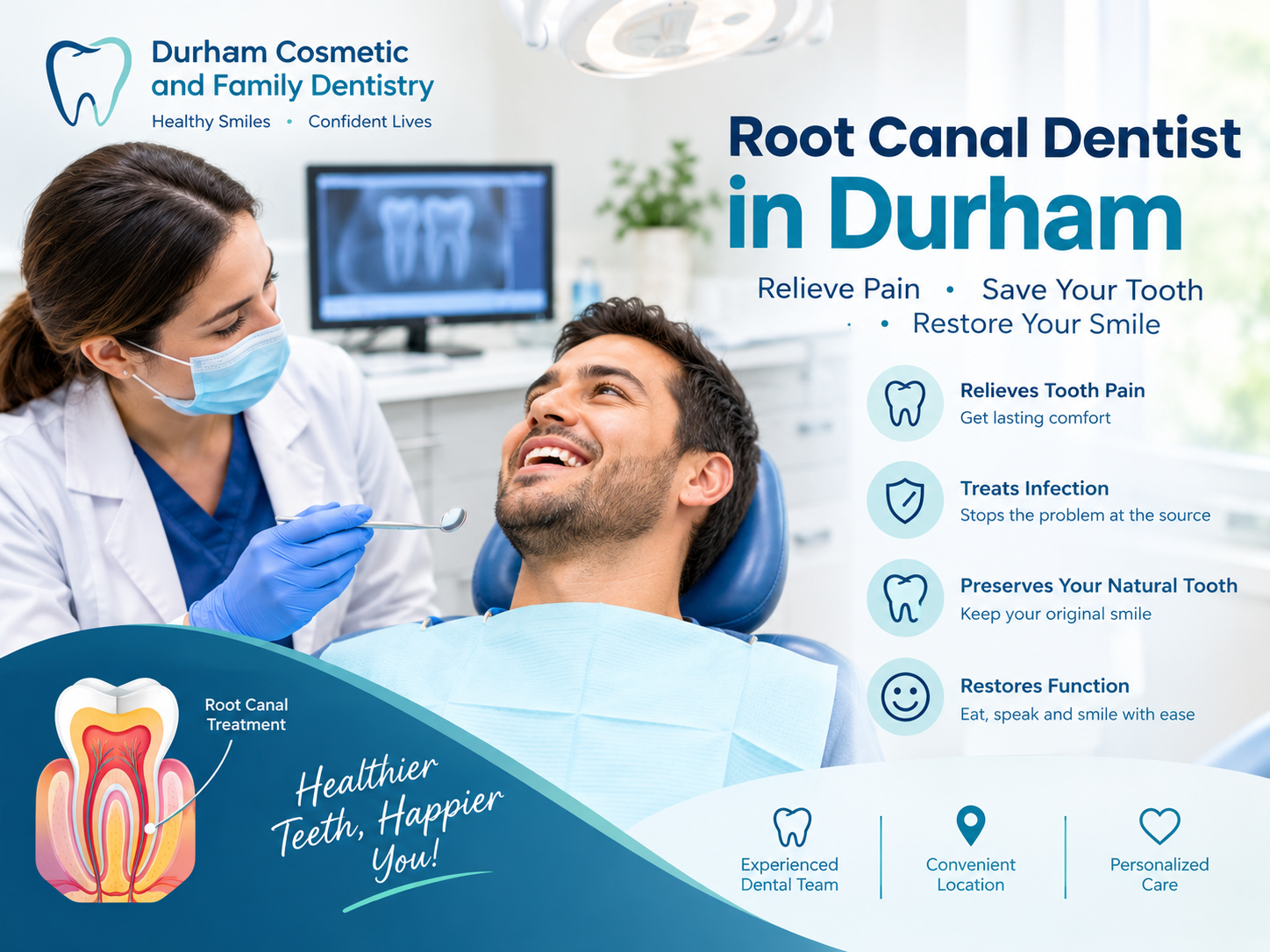
Are you searching for a reliable root canal dentist in Durham, NC to help relieve tooth pain and protect your natural smile? Tooth pain, sensitivity, and swelling can sometimes indicate a problem deep inside a tooth. Getting a timely dental evaluation can help identify the cause and determine the right treatment.
At Durham Cosmetic and Family Dentistry, patients looking for dental care in Durham can explore treatment options for their oral health needs. If you are experiencing persistent tooth discomfort or have been advised to consider root canal therapy, understanding the procedure can help you feel more confident about your next dental visit.
What Is Root Canal Treatment?
Root canal treatment is a dental procedure used to treat infection or damage inside a tooth. The soft tissue inside the tooth, known as the pulp, contains nerves and blood vessels. When this tissue becomes infected or inflamed because of deep decay, cracks, or an injury, root canal therapy may be recommended.
During treatment, the dentist removes the affected tissue, carefully cleans and disinfects the inside of the tooth, and seals the space. A filling or dental crown may be needed to restore the tooth’s strength and function. <Cite refs={[“turn612533search0″,”turn612533search1”]}/>
Signs You May Need a Root Canal Dentist in Durham
Recognizing potential symptoms early can help you seek appropriate dental care.
Persistent Tooth Pain
Ongoing or severe tooth pain may indicate deep decay or inflammation inside a tooth. A dentist can examine the affected area and determine the cause.
Sensitivity to Hot and Cold
If your tooth remains sensitive after exposure to hot or cold foods and drinks, it may need professional evaluation.
Swollen or Tender Gums
Swelling or tenderness around a particular tooth can sometimes indicate an infection. Do not ignore these symptoms, especially if they worsen.
Pain While Chewing
Discomfort when biting or chewing may be associated with tooth decay, cracks, or problems affecting the tissues around the tooth.
Darkening of a Tooth
A tooth that becomes noticeably darker may have experienced damage or changes inside the tooth and should be evaluated by a dentist.
Not everyone with an infected tooth experiences obvious symptoms. A dental examination and appropriate imaging may be necessary to identify the problem.
Benefits of Root Canal Treatment
Root canal therapy can offer several important benefits when it is appropriate for the affected tooth.
- Preserves your natural tooth: Treatment may help save a tooth that would otherwise require extraction.
- Addresses infection: Removing infected tissue and sealing the tooth helps treat the source of the problem.
- Restores chewing function: A properly restored tooth can help you eat more comfortably.
- Supports your natural smile: Keeping your natural tooth may help maintain your existing bite and tooth alignment.
- Helps prevent further complications: Timely treatment can reduce the risk of an untreated dental infection progressing.
Your dentist will assess the condition of your tooth and explain whether root canal treatment or another option is most suitable.
What Happens During a Root Canal Procedure?
If you are considering a root canal dentist in Durham, knowing what to expect can make the process less stressful.
Step 1: Dental Examination
The dentist examines the affected tooth, reviews your symptoms, and may take dental X-rays to assess the extent of the problem.
Step 2: Numbing the Tooth
Local anesthesia is generally used to numb the area before treatment. Tell your dentist if you have dental anxiety or concerns about discomfort.
Step 3: Cleaning the Inside of the Tooth
The dentist creates an opening in the tooth, removes the affected pulp, and cleans and disinfects the internal canals.
Step 4: Sealing the Tooth
The cleaned canals are filled and sealed with appropriate dental materials to help prevent reinfection.
Step 5: Restoring the Tooth
A filling or dental crown may be recommended, depending on how much of the tooth remains and its location. Following your dentist’s restoration instructions helps protect the treated tooth.
The number of appointments depends on the tooth’s condition and the complexity of treatment.
Does a Root Canal Hurt?
Many patients worry about pain during root canal treatment. With appropriate local anesthesia and modern dental techniques, the procedure can often be completed with minimal discomfort.
Some tenderness or sensitivity may occur afterward while the surrounding tissues heal. Your dentist can explain how to manage expected discomfort and when to seek further care.
If fear of dental treatment has delayed your visit, tell your dental team about your concerns so they can discuss ways to help you feel more comfortable.
How to Care for Your Tooth After a Root Canal
Following your dentist’s instructions can support healing and help protect your restored tooth.
- Brush twice daily using fluoride toothpaste.
- Floss carefully every day.
- Avoid chewing hard foods on the treated tooth until your dentist says it is safe.
- Attend any recommended follow-up appointments.
- Get a recommended permanent filling or crown placed promptly.
- Contact your dentist if you experience worsening pain, swelling, or other unexpected symptoms.
A root canal-treated tooth can often function for many years with appropriate restoration and regular dental care.
How to Choose a Root Canal Dentist in Durham, NC
When searching online for a root canal dentist near me in Durham, consider these factors before scheduling your appointment:
- The dentist’s qualifications and experience with root canal procedures.
- Availability of diagnostic imaging and appropriate treatment options.
- Clear explanations of the procedure and expected recovery.
- Transparent pricing and information about dental insurance.
- Convenient office location and appointment availability.
- Patient reviews and communication about treatment alternatives.
For more complex cases, your general dentist may recommend an endodontist, a dental specialist who focuses on treating the inside of teeth.