Teeth Grinding at Night: Signs You May Need a Custom Night Guard
Do you frequently wake up with a sore jaw, headaches, or sensitive teeth? You may be experiencing teeth grinding at night, also known as bruxism. Because nighttime grinding often happens unconsciously, many people do not realize they are doing it until they begin noticing symptoms or their dentist identifies signs of tooth wear.
Over time, repeated grinding and clenching can place excessive pressure on your teeth and jaw. A custom night guard can help create a protective barrier between your upper and lower teeth and reduce direct tooth-to-tooth contact while you sleep.
What Is Teeth Grinding?
Teeth grinding, or bruxism, occurs when a person repeatedly clenches or grinds their teeth. It can happen while awake, but nighttime bruxism occurs during sleep and may be difficult to recognize without noticeable symptoms.
Occasional grinding may not cause significant problems, but frequent or forceful grinding can contribute to enamel wear, tooth sensitivity, chips, cracks, and jaw discomfort.
Common Signs of Nighttime Teeth Grinding
Recognizing the warning signs can help you seek dental care before the problem becomes more serious.
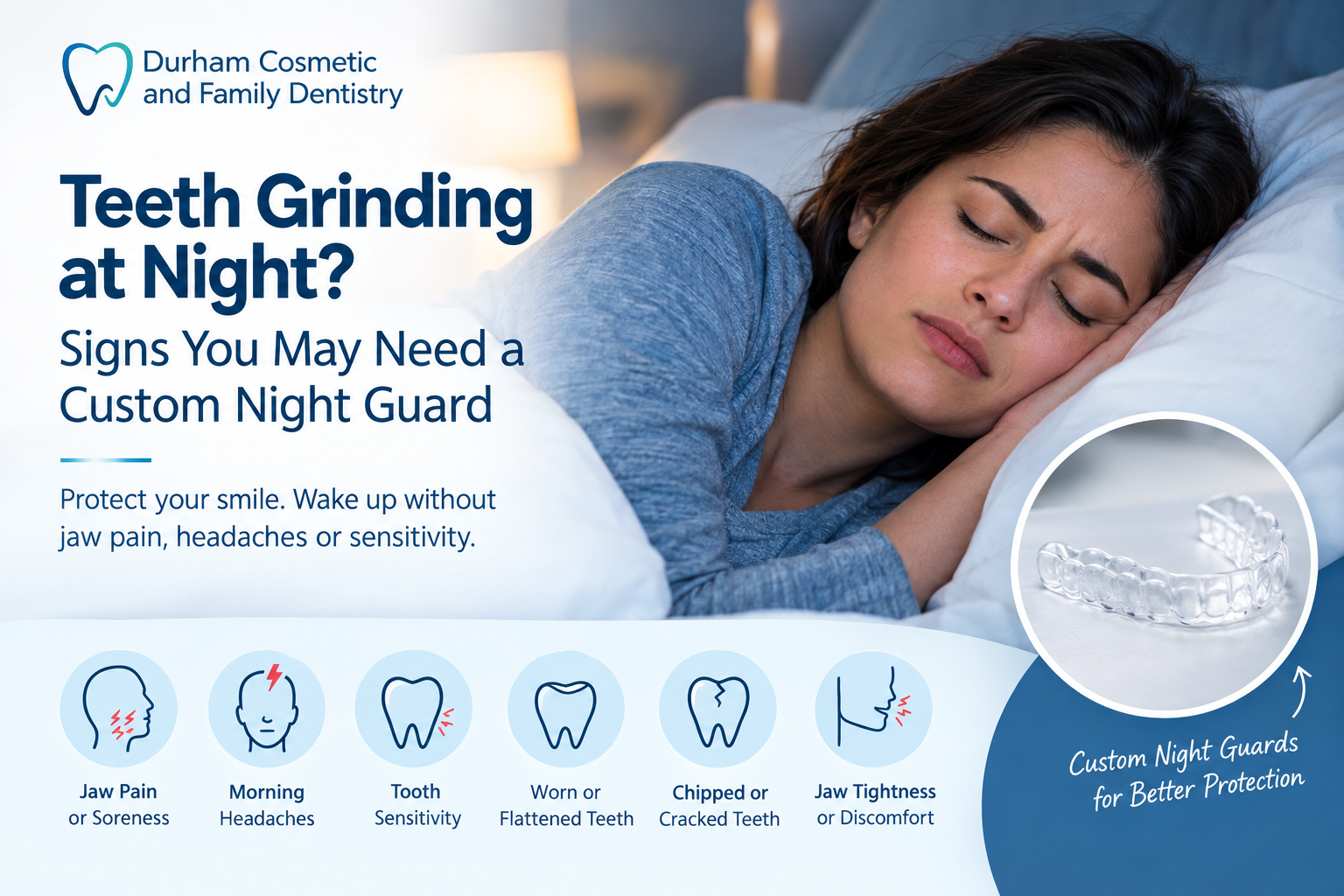
1. Morning Jaw Pain or Soreness
If your jaw feels tired, tight, or sore when you wake up, nighttime clenching or grinding may be contributing to the discomfort.
2. Frequent Morning Headaches
Some people with nighttime bruxism experience headaches or facial discomfort after waking. Persistent morning headaches should be discussed with a healthcare professional or dentist to determine the possible cause.
3. Increased Tooth Sensitivity
Grinding can contribute to enamel wear. As the protective enamel becomes worn, teeth may become more sensitive to hot, cold, sweet, or acidic foods and beverages.
4. Worn or Flattened Teeth
Your dentist may notice unusual wear patterns, flattened biting surfaces, or other changes during a routine dental examination. These can be signs that your teeth are being exposed to excessive grinding forces.
5. Chipped or Cracked Teeth
Repeated pressure from clenching and grinding may increase stress on teeth and dental restorations. If you notice unexplained chips or cracks, schedule a dental examination.
6. Jaw Tightness or Discomfort
Nighttime grinding can place additional stress on the muscles and structures around the jaw. Persistent jaw discomfort should be evaluated by a dental professional.
Why Is Treating Bruxism Important?
Untreated, frequent teeth grinding can gradually affect your oral health. Excessive grinding may contribute to enamel wear, sensitivity, damaged teeth, and jaw discomfort.
The earlier the cause is identified, the sooner your dentist can recommend an appropriate approach to help protect your teeth.
A dental examination can help determine whether your symptoms are consistent with bruxism and whether a night guard may be appropriate for you.
How Can a Custom Night Guard Help?
A night guard is an oral appliance worn while sleeping. It creates a protective layer between the upper and lower teeth, helping prevent direct tooth contact.
A professionally designed night guard may help:
- Reduce direct tooth-to-tooth contact
- Protect enamel from excessive wear
- Reduce pressure associated with nighttime clenching
- Help protect teeth from chips and fractures
- Improve comfort for people experiencing grinding-related jaw tension
The right appliance depends on your individual bite, symptoms, and grinding pattern.
Custom Night Guard vs. Over-the-Counter Options
Night guards are available in different forms, but not every appliance provides the same fit or comfort.
A professionally fitted night guard is designed around your individual teeth and bite. At Durham Cosmetic and Family Dentistry, the dental team evaluates your symptoms and bite before determining which type of appliance may be suitable.
Depending on your needs, options may include firm acrylic, soft flexible, or hybrid night guards. Digital scanning technology can also be used to capture precise information about your teeth for a customized appliance.
How to Care for Your Night Guard
Proper maintenance can help keep your night guard clean and comfortable.
Follow your dentist’s instructions for:
- Cleaning the appliance regularly
- Rinsing it after use
- Storing it safely when not being worn
- Keeping it away from excessive heat
- Bringing it to dental appointments for evaluation
Your dentist can also let you know when your night guard may need adjustment or replacement.
When Should You See a Dentist?
Consider scheduling a dental evaluation if you regularly experience:
- Jaw soreness when waking up
- Morning headaches
- Tooth sensitivity
- Worn or flattened teeth
- Chipped or cracked teeth
- Jaw tightness
- A partner noticing that you grind your teeth during sleep
These symptoms can have several possible causes, so a dental examination is important before assuming that bruxism is responsible.
Protect Your Smile While You Sleep
Nighttime teeth grinding can happen without you realizing it, but its effects can become noticeable over time. Paying attention to symptoms such as jaw soreness, tooth sensitivity, headaches, and tooth wear can help you recognize when it may be time to seek professional advice.
At Durham Cosmetic and Family Dentistry, patients can receive an evaluation to determine whether a custom night guard may be appropriate for their needs. The practice uses digital scanning technology to create customized appliances designed around the patient’s bite.
If you are experiencing signs of teeth grinding or want to learn more about custom night guards in Durham, schedule an appointment with Durham Cosmetic and Family Dentistry at 3608 University Drive, Suite 104, Durham, NC 27707, or call +1 (984) 244-1424.
Frequently Asked Questions
Can teeth grinding damage my teeth?
Frequent or forceful grinding can contribute to enamel wear and may increase the risk of chips, cracks, and tooth sensitivity.
How do I know if I grind my teeth while sleeping?
Morning jaw soreness, headaches, tooth sensitivity, and visible tooth wear can be possible signs. A dentist can examine your teeth for evidence of grinding.
Is a night guard comfortable?
A properly fitted night guard is designed around your individual teeth and bite. Your dentist can recommend an appliance based on your specific needs.
How long does a custom night guard last?
The lifespan varies depending on the material, frequency of use, and severity of grinding. Regular dental checkups allow your dentist to monitor its condition.
Can I clean my night guard?
Yes. Your dentist can provide specific instructions for cleaning and storing your appliance to help maintain its condition.