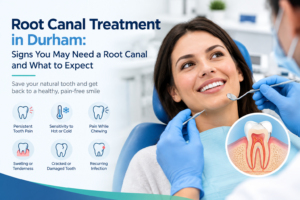
A severe toothache, prolonged sensitivity, or swelling around a tooth can be signs that you need root canal treatment. Choosing an experienced Root canal dentist in Durham ensures you receive safe, comfortable, and effective care while preserving your natural tooth. Modern root canal procedures are designed to relieve pain, eliminate infection, and restore the health of your smile with advanced dental technology and minimally invasive techniques.
If you’ve been searching for a trusted Root canal dentist in Durham, understanding the treatment process and its benefits can help you make an informed decision about your oral health.
What Is a Root Canal?
A root canal is a dental procedure that removes infected or damaged pulp from inside a tooth. After cleaning and disinfecting the root canals, the space is sealed to prevent future infection. In most cases, a dental crown is placed to strengthen and protect the treated tooth.
Signs You May Need a Root Canal
Ignoring dental pain can lead to more serious oral health problems. Common symptoms include:
- Persistent tooth pain
- Sensitivity to hot or cold
- Swollen or tender gums
- Tooth discoloration
- Pain while chewing
- Dental abscess or infection
- Cracked or damaged tooth
If you notice any of these symptoms, schedule an appointment with a qualified root canal dentist as soon as possible.
Benefits of Root Canal Treatment
Root canal therapy offers several long-term advantages, including:
- Relieves severe tooth pain
- Saves your natural tooth
- Prevents infection from spreading
- Restores normal chewing function
- Improves oral health
- Preserves your natural smile
- Cost-effective compared to tooth replacement
Why Choose a Root Canal Dentist in Durham?
An experienced dentist combines advanced technology with personalized care to ensure a comfortable treatment experience.
Comprehensive Services Include:
- Digital X-rays
- Root Canal Therapy
- Emergency Dental Care
- Dental Crowns
- Tooth Restoration
- Follow-Up Care
- Preventive Dentistry
The Root Canal Procedure
Understanding the process can help reduce anxiety.
Step 1: Examination
The dentist examines your tooth using digital imaging to identify the infection.
Step 2: Local Anesthesia
The treatment area is numbed to ensure maximum comfort.
Step 3: Cleaning the Tooth
The infected pulp is removed, and the canals are thoroughly cleaned and disinfected.
Step 4: Sealing the Tooth
The canals are filled with a biocompatible material to prevent reinfection.
Step 5: Dental Crown Placement
A custom crown is placed to restore strength, function, and appearance.
Advanced Technology for Comfortable Treatment
Modern dental clinics use advanced equipment to improve precision and patient comfort.
- Digital X-rays
- Rotary Endodontic Instruments
- Electronic Apex Locators
- Digital Imaging
- High-Quality Dental Materials
- Modern Sterilization Techniques
Aftercare Tips
Proper care after treatment helps ensure a smooth recovery.
- Avoid chewing on the treated tooth until fully restored.
- Brush and floss daily.
- Take prescribed medications as directed.
- Attend follow-up appointments.
- Wear a nightguard if you grind your teeth.
- Visit your dentist regularly for checkups.
Why Early Treatment Matters
Delaying root canal treatment can lead to worsening infection, severe pain, bone loss, or even tooth extraction. Seeking treatment early helps preserve your natural tooth and reduces the need for more complex procedures.
Conclusion
Choosing a trusted root canal dentist in Durham is the best way to protect your oral health and save your natural teeth. With advanced technology, experienced dental professionals, and patient-focused care, root canal therapy is a safe and effective solution for treating infected teeth. If you’re experiencing tooth pain or signs of infection, schedule an appointment promptly to restore your smile and prevent further complications.